Cold Cuts and Cold Cash: Is a Hotel Kitchenette Worth the Upgrade?
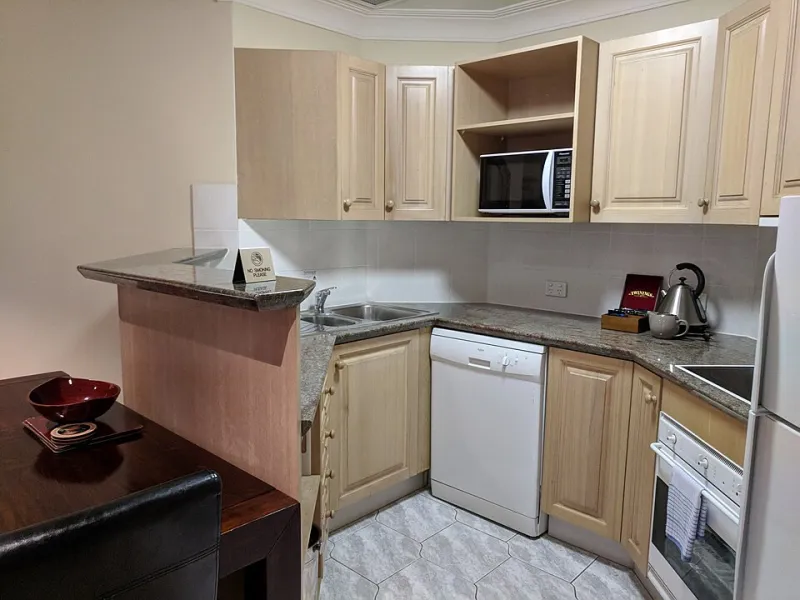
Photo: Nick-D, CC BY-SA 3.0, via Wikimedia Commons
Every hotel listing has the same photo: a shiny mini-fridge, a microwave, a coffee maker lined up like a boy band. What the photo doesn't tell you is whether the fridge actually gets cold, whether the microwave fits anything bigger than a bagel, or whether there's a single outlet you can reach without moving the bed.
That gap matters, because a kitchenette room usually costs more than a standard one. Sometimes it's $15 a night. Sometimes it's $60. And sometimes the "kitchenette" is one dorm fridge wedged under a desk.
So before you pay for the upgrade, run the audit. It takes about ten minutes and it's the difference between a room that saves you $150 on a trip and a room that just looks like it might.
First, Figure Out What You're Actually Renting
Hotel marketing treats four very different things as if they're the same thing.
The beverage cooler. Usually 1.5 to 2 cubic feet, sometimes thermoelectric rather than compressor-driven. It'll chill a soda. It will not keep a pound of ground beef at a safe temperature, and it may not have a freezer section that freezes anything.
The compact fridge. Real compressor, 3 to 4 cubic feet, often with a tiny ice box. This is the workhorse. If you get one of these, you can genuinely provision for a few days.
The kitchenette. Sink, two-burner cooktop or a plug-in burner, microwave, some counter. This is where the math starts working in your favor.
The full kitchen. Rare outside extended-stay brands and condos, but it's the real deal — full-size fridge, oven, dishwasher, dishes.
When a listing says "kitchenette," ask which of these four it is. Front desks know. They get asked constantly. "Does the room have a real fridge with a freezer, or the small cooler kind?" is a normal question, not a weird one.
The Temperature Question Nobody Asks
Here's the boring but important part: the USDA says your fridge at home should hold at 40°F or below, with the freezer at 0°F. A thermoelectric cooler in a hotel room often hovers in the 45–50°F range, especially in summer when the room's warm and the unit's working against itself.
That's fine for drinks and sealed snacks. It's not fine for deli meat, dairy, or leftovers you plan to eat two days later.
Ask the front desk directly: "Is it a compressor fridge or a cooler?" If they don't know, read recent reviews and search for the word "fridge." Guests complain loudly and specifically about warm fridges. It's one of the most reliable signals in the entire review ecosystem.
The Outlet and Counter Audit
An appliance you can't plug in is furniture. A few things to check before you commit:
- Outlet count and placement. Older properties sometimes have one accessible outlet near the desk, and the fridge is already using it. If you're bringing a portable burner, an instant pot, or a laptop, you need to know.
- Counter space. A microwave with nothing beside it means you're prepping on the bathroom counter. Not a dealbreaker, but adjust expectations.
- Microwave size. Compact units often top out around 0.7 cubic feet. That fits a plate, not a casserole dish. If you're planning real meals, check the interior dimensions in reviews or ask.
- Sink and supplies. Does the kitchenette include dish soap, a sponge, paper towels, and actual dishes? Some properties provide a starter kit; others charge a fee or hand you a laminated card listing replacement costs.
- Trash. Cooking generates waste. A single tiny bin under the desk gets full fast.
One more: ask whether the fridge comes empty. A handful of brands stock minibars with sensor shelves, and moving an item to make room for your own groceries can trigger a charge. "Can you confirm the fridge will be empty on arrival?" is a fair question at check-in and worth a note on your reservation.
The Fees Hiding Behind the Word 'Kitchenette'
Most of the cost surprises live in three places.
The kitchenette premium itself. Compare the same property's standard room and kitchenette room for your exact dates. It's often $20–$40 a night at midscale brands and considerably more at resorts.
Housekeeping add-ons. A few properties charge a cleaning fee if you leave dirty dishes or use the cooktop. Ask about the policy in writing before arrival.
Resort and destination fees. These sometimes get repackaged as covering "in-room coffee and kitchen amenities." That's not a savings, it's a relabeling. Read the fee disclosure line by line.
The Break-Even Math
Here's the part that actually decides it.
Let's say the kitchenette upgrade runs $30 a night and you're staying three nights. That's $90.
Now price out what you'd otherwise spend. A family of four eating breakfast out at a casual spot runs roughly $45–$60 with tax and tip. Do that three mornings and you're at $135–$180. Add one packed lunch per day at $10 a head saved, and the kitchenette is comfortably ahead.
But — and this is the honest part — only if you use it. Plenty of travelers pay the premium, buy $40 of groceries, eat two yogurts, and leave the rest behind. That's a $90 upgrade plus $40 of food to save maybe $25.
The formula is simple: upgrade cost per night ÷ meals you'll realistically replace per day = nights to break even. If that number is bigger than your stay, skip the upgrade and take the free breakfast.
When a Cooler Beats the Kitchenette
On a road trip, the math shifts. A decent hard-sided cooler runs $40–$80 once, and a bag of ice every day or two costs a few bucks. If you're moving hotels every night, you don't need a kitchenette — you need a cooler and a rest stop with a picnic table.
A kitchenette earns its keep when you're staying put: three or more nights, same property, a family or a long work trip, or a destination where restaurant prices are genuinely steep.
The Short Version
Ask three questions before you pay the upgrade. Is the fridge a compressor or a cooler? Is there counter space and a reachable outlet? And does the property charge anything extra for using the kitchen?
Then run the break-even math with real numbers from real restaurants near the hotel. If the upgrade pays for itself in two nights, book it. If it doesn't, the free breakfast is probably the better deal — and the coffee's already made.