The Money That Checks In Before You Do: A Practical Guide to Hotel Incidental Holds
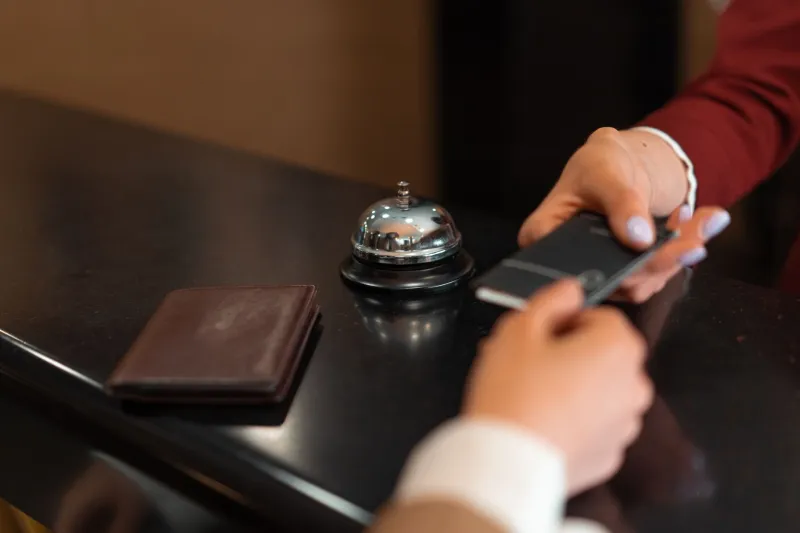
You booked a $129 room. You budgeted for $129, plus tax, plus maybe a parking fee. Then you hand over your card at the front desk and the clerk says something like, "I'm just going to authorize it for $250." Nothing is broken. Nobody is scamming you. But for the next several days, a chunk of your money is sitting in limbo — and if you paid with a debit card, that money may already be gone from your checking account.
This is the incidental hold, and it's one of the most misunderstood line items in American hotel travel. It doesn't show up in the rate you compared on Kayak. It doesn't appear in the confirmation email. And it trips up budget travelers constantly, especially on road trips where one night's lodging in three different towns means three separate holds stacking up on the same card.
An authorization is not a charge (but your bank may not care)
When a hotel takes an incidental hold, it isn't billing you. It's asking your card issuer to set aside a specific amount in case you trash the room, raid the minibar, order room service, or leave a parking tab unpaid. If you behave like a normal human, that hold gets released after checkout and the final charge settles at the actual amount you owe.
On a credit card, this is mostly a nuisance. Your available credit dips for a few days and then bounces back. On a debit card, it's a different animal. The hold affects your actual checking balance. Rent money, grocery money, gas money — it's all still technically yours, but you can't spend it. And if the hold pushes you below zero, your bank may happily charge you an overdraft fee for the privilege of having your own cash locked up.
Why the hold is bigger than your nightly rate
Hotels generally don't hold the room rate. They hold the room rate plus tax, plus any resort or destination fee, plus a cushion for incidentals. At many mid-range US properties, that cushion runs somewhere between $50 and $100 per night. At some full-service and resort hotels, a flat hold of $200 to $500 per stay is common. A few brands scale the hold by length of stay, which means a four-night trip can freeze noticeably more than a single night.
There's no universal standard here, which is exactly why it's worth asking. Two hotels on the same exit off I-95 can have wildly different policies. The $89 roadside motel might hold a flat $100. The $109 chain property next door might hold $50 per night for four nights. Same ballpark rate, very different cash impact.
Debit cards, prepaid cards, and the overdraft trap
If you only take one thing from this article, make it this: use a credit card for hotel incidentals whenever you can. A credit card hold ties up available credit, not grocery money. A debit card hold ties up cash, and the release timing is often slower.
Prepaid debit cards are the worst case. Some hotels won't accept them at all for incidentals, and those that do may place a hold that takes an unusually long time to fall off. If you're traveling on a tight budget and a debit card is your only option, call the hotel before you book and ask two questions: how much is the hold, and how long after checkout is it released.
How long until the money comes back
Release timing depends on the hotel and your bank, roughly in that order. A credit card hold typically clears within one to five business days after checkout. Debit card holds often take longer — sometimes up to ten business days, occasionally more if a weekend or holiday gets in the way. The hotel releases the authorization; your bank then decides how quickly to post the funds back to your account. That second step is outside the hotel's control, which is why front desk staff sometimes can't give you a precise answer.
One more wrinkle: prepaid and third-party bookings don't skip the hold. Even if you paid Expedia or the hotel's own website in full months ago, you'll usually still need a card at check-in for incidentals. Budget for it.
Questions to ask before and at check-in
A two-minute phone call before your trip can save you a week of staring at your banking app. Here's a practical checklist:
- How much is the incidental hold, and is it per night or per stay? Get a dollar figure, not a vague "it depends."
- Does that number include taxes and resort fees, or is it on top?
- When do you release the authorization after checkout? Ask for business days, not "a few days."
- Can I use a different card for the hold than the one I booked with? Usually yes, and a credit card is the better choice.
- Will you give me a printed folio at checkout showing a zero balance? This is your proof if the hold lingers.
At the desk, confirm the hold amount out loud before you sign anything. It's a completely normal question and staff field it all day.
The checkout habit that saves you a headache
When you check out, ask the front desk to release the incidental authorization and hand you a zero-balance folio. Write down the date and the name of the person who helped you. If the hold is still showing a week later, you now have documentation and a timeline. Call the hotel first, ask for the authorization code, then call your card issuer with that code in hand. Disputing before you've done those two steps usually just delays things, because the issuer will turn around and contact the hotel anyway.
The bottom line
The room rate is the sticker price. The incidental hold is the fine print — and on a multi-stop US road trip, those holds add up fast. Use a credit card, keep a cash buffer in your checking account, ask the hold question before you book, and leave with a zero-balance folio in your hand. Your money will find its way back. A little preparation just makes the wait a lot less painful.