Bedding Roulette: How to Read a US Hotel Room Before You Check In
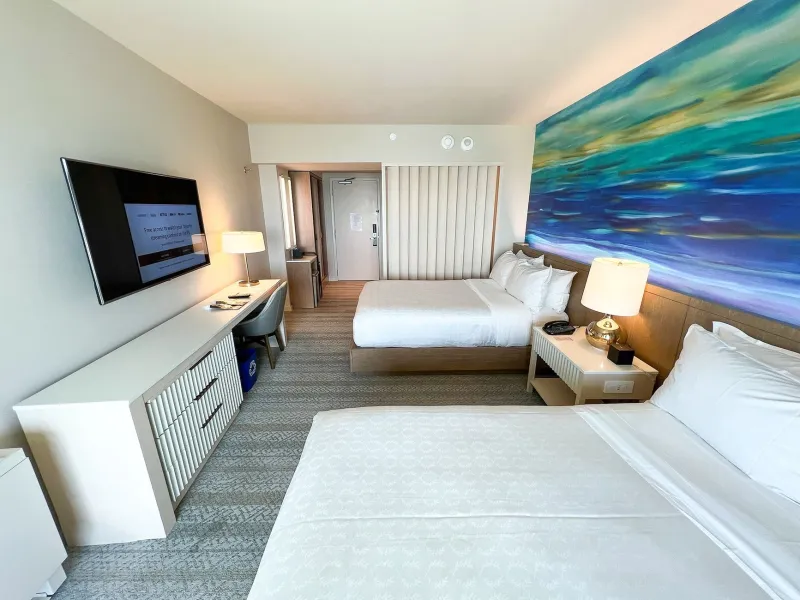
You did the responsible thing. You booked a room with two queen beds, typed the kids’ names into the reservation, and pictured everyone sleeping in separate spots. Then you open the door at 10:40 p.m. and find one king bed, a sofa bed with a five-inch mattress, and a note about “complimentary rollaway availability.” Welcome to bedding roulette.
This isn’t always a scam. US hotel room descriptions are a mix of brand standards, property quirks, inventory codes, and third-party shorthand. The words “two queens” can mean two 60-inch-wide beds, two doubles dressed up as queens, or a king plus a sofa bed that technically sleeps two. Here’s how to read the fine print before you pay.
Why “Two Queens” Can Turn Into One King
A hotel’s room type is often an inventory bucket, not a promise carved in stone. Brands set broad standards, but individual properties control how rooms are described on their own websites, on booking sites, and in the front-desk system. A room may be sold as “two queens” because that is the most common setup in that category. If the hotel is full or housekeeping has taken a room out of service, the front desk may substitute a king room with a sofa bed and call it comparable.
The same label can also hide size differences. In the US, a standard queen mattress is about 60 inches wide by 80 inches long. A full or double is about 54 by 75. A 48-inch-wide bed is closer to a small double than a true US queen, yet some compact or older rooms still get marketed with generous bedding language. If you are splitting a room with a friend or putting two teenagers in one bed, those inches matter.
Sofa beds deserve their own warning. “Sleeps four” may mean two people in a king and two on a fold-out couch. That is not the same as two queens, especially after a long road-trip day. Always count the actual beds, not just the sleep number.
The Codes Behind the Curtain
Hotel reservation systems use shorthand. You will see codes like K for king, Q for queen, QQ or 2Q for two queens, DD for two doubles, and ST or SB for sofa bed. Some properties use “ROH,” which stands for run of house. That means you get whatever room the hotel assigns—often the cheapest available category. It can be a great deal for a solo traveler who truly does not care about bedding. It is a terrible idea for a family of four with a 7 a.m. soccer game.
“Standard room” is another phrase to treat as a warning label. It may mean a king, two doubles, a queen, or a room with a view of the parking garage. “Bed type requested” is weaker than “bed type guaranteed.” Third-party sites sometimes show “room type selected at check-in,” which is exactly what it sounds like: you are buying a place to sleep, not a specific bed arrangement.
Major US chains generally use clear labels on their own sites—Marriott often lists “Room, 2 Queen(s)” or “Room, 1 King,” Hilton shows “2 Queen Beds” or “1 King Bed,” Hyatt uses “2 Queen Beds” and “King Bed,” and IHG and Choice properties often spell out “2 Queen Beds” versus “2 Double Beds.” The problem is not usually the brand’s wording. It is the gap between the label, the property’s actual inventory, and the overworked front desk at 11 p.m.
Before You Click “Reserve”
Start by filtering for the exact bed configuration you need, then read the room description instead of trusting the photo. Photos are often staged and may show a different room category. Look for phrases like “bed type is not guaranteed” or “run of house.” If you are booking through a third-party site, check the hotel’s own page for the same room type and compare the bedding language.
Avoid any rate that says “standard room” if bedding is non-negotiable. If you need two queens, book two queens—not a king with a “rollaway available upon request.” Rollaway beds can be limited by fire code, unavailable at check-in, or charged as an extra fee. They are also not a fair swap for a real bed when you are paying for a room that sleeps four.
The 90-Second Confirmation Script
Once you have a reservation number, call the hotel directly—not the central reservations line—about 48 hours before arrival. Use this script:
“Hi, I’m calling about reservation [number] for [date]. I booked a room with two queen beds. Can you read back the bed configuration code on my reservation? Is that two 60-inch queens, or two doubles? If that room type is unavailable when I check in, what happens—will you move me to a comparable room with two beds at no charge? Can you add a note that bedding is the priority, not an upgrade?”
Ask them to email you a confirmation that shows the bed type. If you booked through a third-party site, call the hotel after booking and ask them to attach the bedding request to your reservation. Get the name of the person you spoke with. A note in the file is not a legal guarantee, but it is better than arriving with nothing but a screenshot.
If You Arrive and It’s Wrong
Stay calm and show your confirmation. Ask for the manager on duty and ask what comparable rooms are available tonight. If you booked an exact bed type and the hotel cannot deliver it, ask whether they will move you to another property at their expense or adjust the rate. If you booked run of house, your leverage is thinner—but you can still ask for a rollaway fee to be waived or for a room move the next day.
Bedding is part of the product, not a cosmetic detail. Book the exact configuration, confirm it in writing, and treat vague room labels as a warning. In 2026, the best hotel hack is still the boring one: read the fine print, then call and ask a human.