Quiet Isn’t a Room Type: How to Pick a Hotel Location, Not Just a Rate
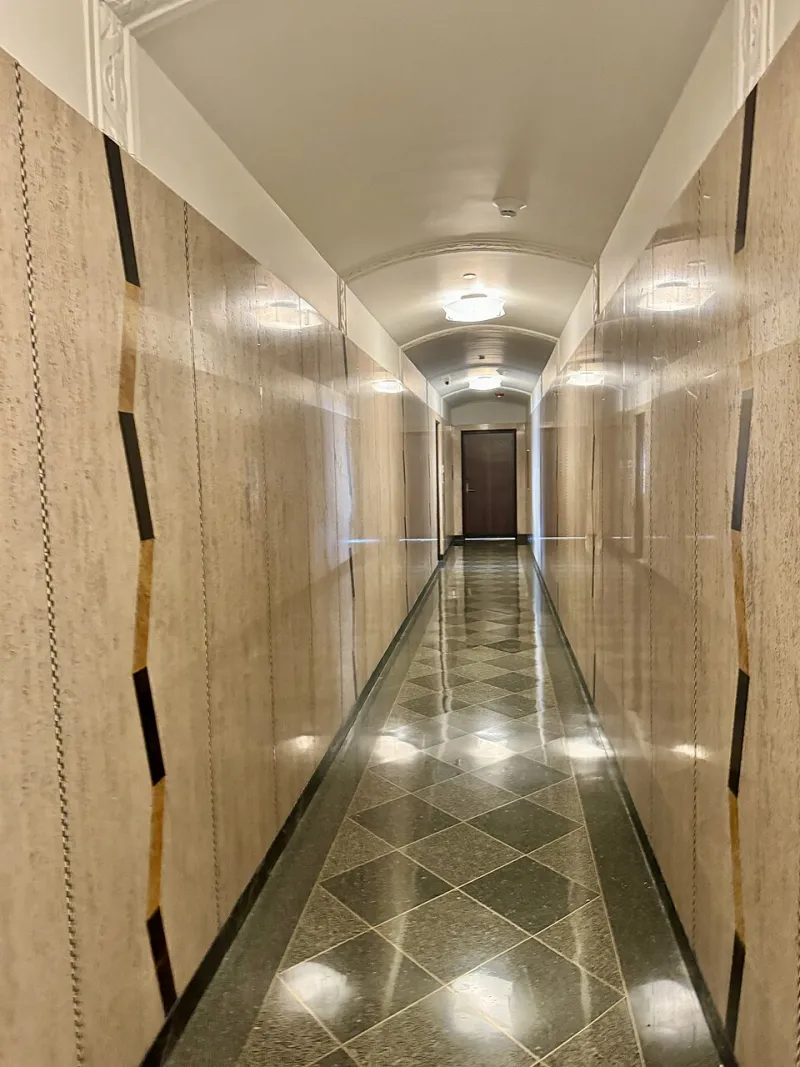
Photo: w_lemay, CC BY-SA 2.0, via Wikimedia Commons
Most booking pages sell you a bed size and a cancellation window. They rarely tell you that room 214 might sit ten feet from the elevator, or that the rooms ending in 01 face a six-lane interstate. That information exists, though. You just have to read the building before you commit.
A Room Number Is a Coordinate
Hotel room numbers follow patterns, even if every chain uses its own dialect. The first digit usually tells you the floor. The last two tell you where you are along the hallway. A room ending in 01 is often a corner or the first door off the elevator lobby. A room ending in 18 might be at the far end, near the stairwell, or next to the mechanical closet.
That is not a universal code. Some properties number by wing, some skip floors for superstition, and some use four digits that mean nothing to outsiders. But you can often learn the pattern from guest photos, review mentions, or a quick call to the front desk. Ask a simple question: “Are the low-numbered rooms closer to the elevator?” If the answer is yes, you have a useful map.
Low numbers are not automatically bad. They are bad if you want silence. They are great if you have mobility issues, a lot of luggage, or a early flight and no patience for a long hallway at 5 a.m. The point is to choose deliberately.
Read the Building Around the Building
Before you book, open a satellite map of the address. This is the cheapest upgrade in travel planning. Look for the highway on-ramp, the rail line, the delivery alley, the rooftop bar next door, and the parking garage that idles under guest windows. A room facing the courtyard may be quieter than a room facing the street, even if both are the same price.
Then check the hotel’s own photos for event space. A ballroom or conference center can mean clinking glasses, rolling carts, and a 1 a.m. teardown. If the hotel hosts weddings, ask where those guests tend to gather. The bar patio is usually a bigger sleep risk than the lobby.
Street view helps too. A hotel can look calm in its listing photos while sitting directly across from a fire station or a 24-hour diner with a drive-thru speaker. In 2026, satellite and street imagery are current enough to spot most of the obvious problems.
Reviews Are Floor-Plan Footnotes
Do not just read the overall score. Search the recent reviews for words like “elevator,” “ice machine,” “bar,” “highway,” “conference,” “ballroom,” and “HVAC.” Sort by newest. A review from three years ago is a history lesson; a review from last month is a warning label.
Look for room numbers in reviews. Guests often volunteer them: “Room 512 was right by the ice machine.” That is free intelligence. If several reviews mention noise in rooms ending in 10 through 14, you have found the building’s weak spot.
Photos help too. Guests sometimes post hallway shots that reveal where the vending area sits or how close the door is to the elevator bank. You are not being paranoid. You are doing five minutes of research that can save you a night of staring at the ceiling.
The Request That Actually Works
“Quiet room” is a wish. “High floor, away from the elevator and ice machine, not facing the highway” is a request a front-desk agent can actually fill. Be specific but flexible.
Call the hotel directly 24 to 48 hours before arrival. Ask the agent to note your preference on the reservation. Then repeat it politely at check-in: “I know you can’t guarantee it, but do you have anything on a higher floor away from the elevator?” If the hotel is full, ask what the quietest available option is. Sometimes that means a room facing the courtyard instead of the pool.
If you are booking a chain with a mobile check-in option, use the room-selection screen if it appears. Not every property offers it, but when it does, you can often see the floor and room number before you commit. A room on the top floor at the end of the hall is usually worth taking over a lower-floor room beside the elevator.
When a Slightly Higher Rate Buys a Better Night
This is the part budget travelers hate to hear: sometimes the $12 difference is not a splurge. It is sleep insurance. A higher room category may put you on a top floor, in a corner, or away from a noisy courtyard. But do not assume the upgrade is better. Verify what the higher rate actually buys.
Ask the front desk: “What is different about that room besides the size?” If the answer is “it’s on a higher floor,” that may be worth it. If the answer is “it has a sofa,” you are paying for furniture, not quiet. A suite beside the elevator can be worse than a standard room at the end of the hall.
Run the math against your trip. If you are arriving at midnight and leaving at 7 a.m., a noisy room is annoying but survivable. If you have a work call, a wedding, or a long drive the next day, the extra money is easier to justify. In 2026, hotel rates swing enough that a small upgrade can cost less than a bad breakfast.
A Five-Minute Pre-Book Routine
Start with the room-number pattern. Check the satellite map for highways, rail lines, and loading docks. Search recent reviews for noise words and room numbers. Then make a specific request when you book, and call again a day or two before arrival. At check-in, ask what is actually available.
You will not always get the perfect room. Hotels sell what they have, and plans change. But you can stop guessing. A room number is not a lottery ticket. It is a coordinate, and coordinates can be checked before you hand over your card.