The Upgrade Is Cheaper When You’re Already Standing There
Photo: Christianmsufan88, CC BY-SA 4.0, via Wikimedia Commons
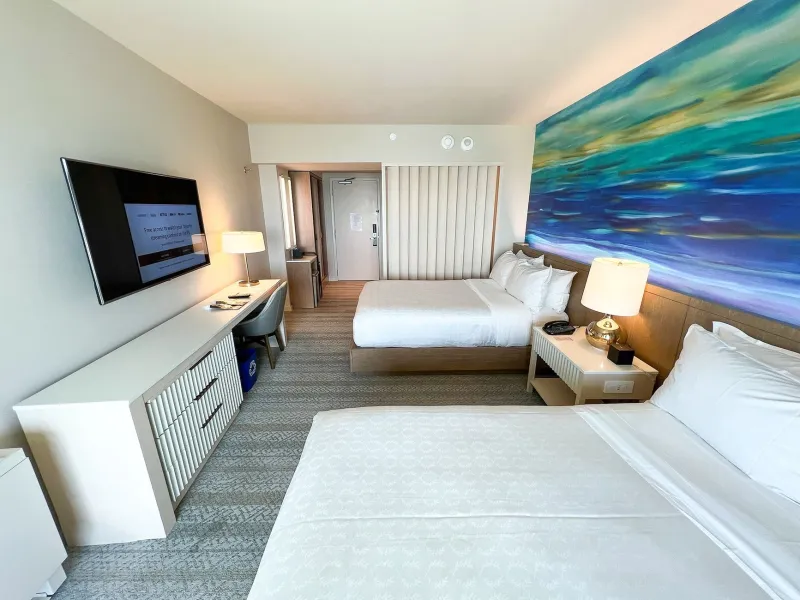
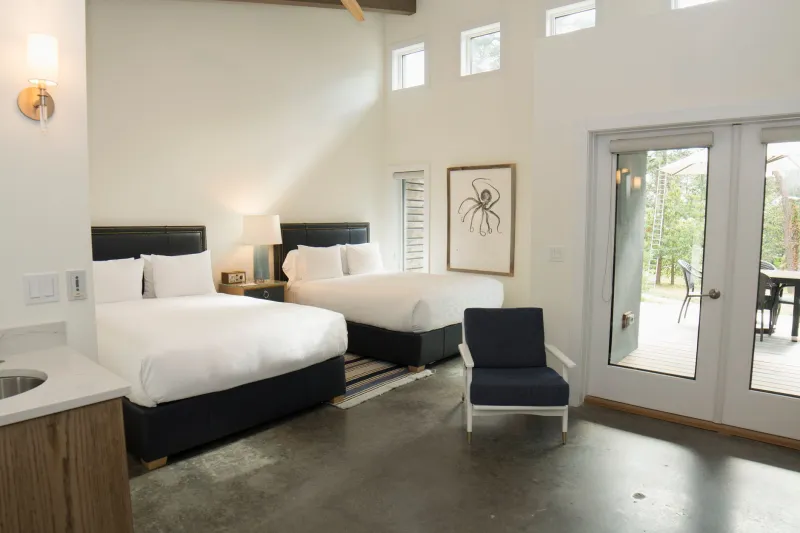
Hotel room tiers are sold like airline seats: the difference between a standard room and a “deluxe” room is often a few feet of floor space, a coffee maker, and a label. That does not mean upgrades are worthless. It means the price you see online is not the only price available. At check-in, you are sometimes dealing with a different seller — a front desk with unsold rooms and a nightly deadline.
The practical question is not “Can I get a free upgrade?” It is “What is the real cost of moving up a tier, and is that cost lower now than it was when I booked?” Sometimes the answer is yes. Sometimes the desk quote is worse than the online rate. The only way to know is to compare like an adult with a calculator, not like a traveler hoping for a magic word.
Why the front desk can undercut the website
Online room tiers are packaged for advance sale. You pick a rate, a cancellation policy, and a room category, and the hotel locks in revenue. A paid upgrade at check-in is different. The room is already empty, the arrival date is today, and the hotel would rather sell it for something than let it sit. That is perishable inventory, and perishable inventory gets discounted late.
There is another factor: the online “upgrade” price may include a rate-plan change, extra fees, or a package you did not ask for. The desk can often quote a simple cash difference or a points amount. That does not guarantee a deal. It just means the desk has a different menu.
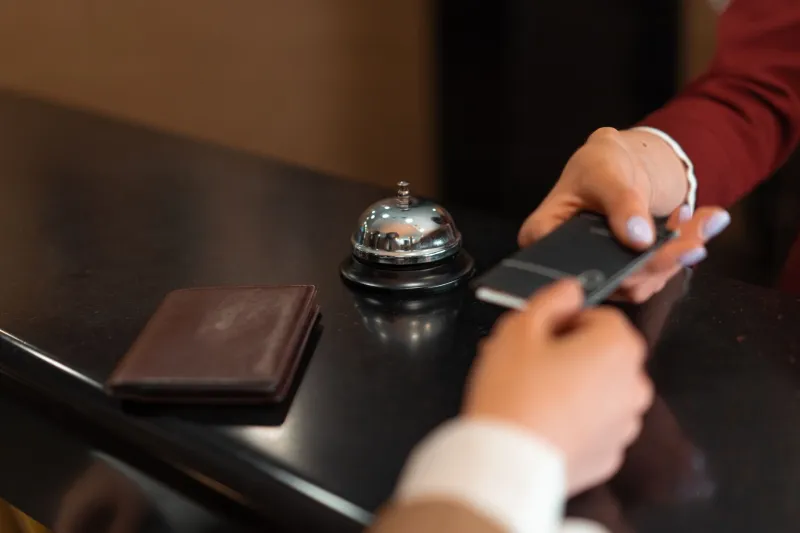
This is also why elite status matters less than timing. A sold-out Tuesday in a convention city is not the moment for a bargain. A slow Sunday at a full-service hotel near an airport is a better bet. In 2026, mobile check-in and digital keys have removed some face time from the process, but they have not removed the front desk’s ability to move you — if you actually ask.
How to ask without making it weird
Skip the vague “Any upgrades available?” It puts the clerk in the position of guessing what you want and whether you are asking for a freebie. Be specific and polite.
Try this: “I’m here for two nights. What would it cost to move to a room with two queen beds and a sofa bed, if one is open?” Or: “Is there a paid upgrade to a suite for tonight, and what’s the total with tax?”
Three details matter. First, ask whether the quote is per night or for the whole stay. Second, ask whether taxes and resort fees change. Third, ask whether you would have to switch rooms on the second night. A $30 upgrade that requires packing and moving at 11 a.m. is not a $30 upgrade.
Do not open with a folded bill. The so-called “$20 trick” is a social gambit, not a rate. In many US hotels it is awkward, and in some it is against policy. Ask directly, then tip after good service if you want. You will get a clearer answer.
Which US chains tend to have room to move
There is no nationwide rule, but the pattern is familiar. Full-service brands under Marriott, Hilton, Hyatt, and IHG generally have more room categories, more suites, and more front-desk authority than limited-service roadside hotels. A Hampton Inn or a La Quinta may have exactly one room type beyond standard, so there is little to sell. A downtown Marriott or Hyatt Regency may have club rooms, corner rooms, and suites that are still vacant at 5 p.m.
Independent hotels can be the most flexible and the least predictable. Casino hotels may discount aggressively on slow weeknights and not at all on weekends. Extended-stay properties usually have less upgrade inventory because the rooms are designed for longer stays and the difference between tiers is often just bed count.
Loyalty status helps at the margins, especially for complimentary upgrades, but do not count on it. A polite request with a specific room type beats a status tier and a vague question. And if the desk says no, ask one follow-up: “Is there a paid option?” That is not pushy. It is shopping.
When the paid upgrade is a waste of money
A one-night stay is usually the wrong time to pay for an upgrade. You arrive late, you leave early, and the extra square footage goes unused. The same goes for airport hotels before a dawn flight. You are buying a bed and a shower, not a lifestyle.
Be skeptical of “premium” rooms that only promise a higher floor. A high floor is not a view. It can face the parking garage, the air-conditioning units, or a brick wall. Ask exactly what changes: square footage, bed type, view category, balcony, kitchenette, lounge access, or a separate living area. If the answer is “it’s our premium category,” ask for the room description in plain English.
Watch for resort fees. A room upgrade can push you into a higher fee tier or a club-level charge that is not included in the quote. If the hotel has a club lounge, confirm its hours and whether it is open on your dates. A closed lounge on a Sunday morning turns a “club room” into a regular room with a nicer hallway.
Finally, compare the desk quote with the online difference before you arrived. If booking the better room online would have cost $15 more per night and the desk wants $40, say no. If the desk wants $20 total for a suite and you are staying three nights, that is a different conversation.
How to spot a premium room that isn’t worth it
Look for measurable differences, not adjectives. “Deluxe” and “preferred” mean whatever the hotel wants them to mean. “Suite” can mean a true one-bedroom suite or a studio with a sofa and a microwave. “View” can mean a sliver of ocean between two buildings. “Club access” can mean a lounge that closes at 7 p.m.
Ask three questions at the desk: What is the square footage? What is the bed configuration? What exactly is the view? If you need space for a family, ask about a sofa bed and whether it is in a separate room. If you need quiet, ask whether the room faces the street or the pool. A $20 upgrade to a quieter room is often a better deal than a $60 upgrade to a “view” room over the loading dock.
The simple math before you say yes
Take the desk quote, multiply by the number of nights, and add any tax or fee change. Then ask what you are actually buying. For a solo traveler on a one-night layover, the value is close to zero. For a family of four staying three nights, a suite with a separate bedroom and free breakfast can be worth real money — but only if breakfast is included and the lounge or restaurant is actually open.
The front desk is not a charity. It is a sales counter with a clock running. That is exactly why it can be worth asking. Just do it with a specific request, a total price, and a willingness to hear no. The upgrade is cheaper when you are already standing there — but only when the room behind the key card is actually better.